
MKSAP Quiz: recurrent, painful mouth sores
A 21-year-old man is evaluated for painful sores in his mouth. Episodes of these sores have occurred two to three times yearly since he was 16 years old, and he believes they are associated with stress. They usually appear on the inside of his mouth as a single, round, painful lesion, lasting for 5 to 10 days and resolving without scarring. He now has concerns about whether he might have herpes.
He has had no fever, chills, arthralgias, genital ulcers, rashes, eye problems, diarrhea, abdominal pain, or weight loss. He is sexually active and has had only a few sexual partners, although he is currently monogamous. All of his sexual interactions have been heterosexual. He does not use illicit drugs. Results of HIV testing for his sexual partner and him from 3 months ago were negative. The remainder of the history is noncontributory.
On physical examination, the vital signs are normal. The oral examination is significant for the lesion shown. The remainder of the physical examination is unremarkable.
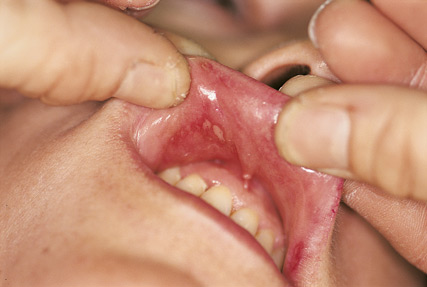
Which of the following is the most appropriate management option for this patient?
A. Thalidomide
B. Herpes simplex testing
C. HIV testing
D. Reassurance
E. Candidiasis culture
Answer and Critique
The correct answer is D. Reassurance. This question can be found in MKSAP 14 in the General Internal Medicine section, Item 73.
This patient should be reassured that he has recurrent aphthous ulcers, not herpes simplex virus infection. Recurrent aphthous ulcers usually begin to occur in the teenaged years and recur intermittently, and their etiology is unknown. Thalidomide has been found useful in treating severe stomatitis among patients with immunodeficiency, particularly those with HIV, but it is not indicated in this patient. Before treatment with thalidomide is initiated, clinicians are required by the manufacturer to register and ask patients to complete an informed consent, because this drug, even when transmitted by seminal fluids, can cause birth defects. Performing another HIV test is not indicated in this patient at this time. Patients with oropharyngeal candidiasis often describe a cottony sensation in the mouth, loss of taste, and, occasionally, pain induced by eating and swallowing, symptoms not present in this patient.
Key Point
- Recurrent aphthous ulcers usually begin to occur in the teenaged years and recur intermittently, and their etiology is unknown.